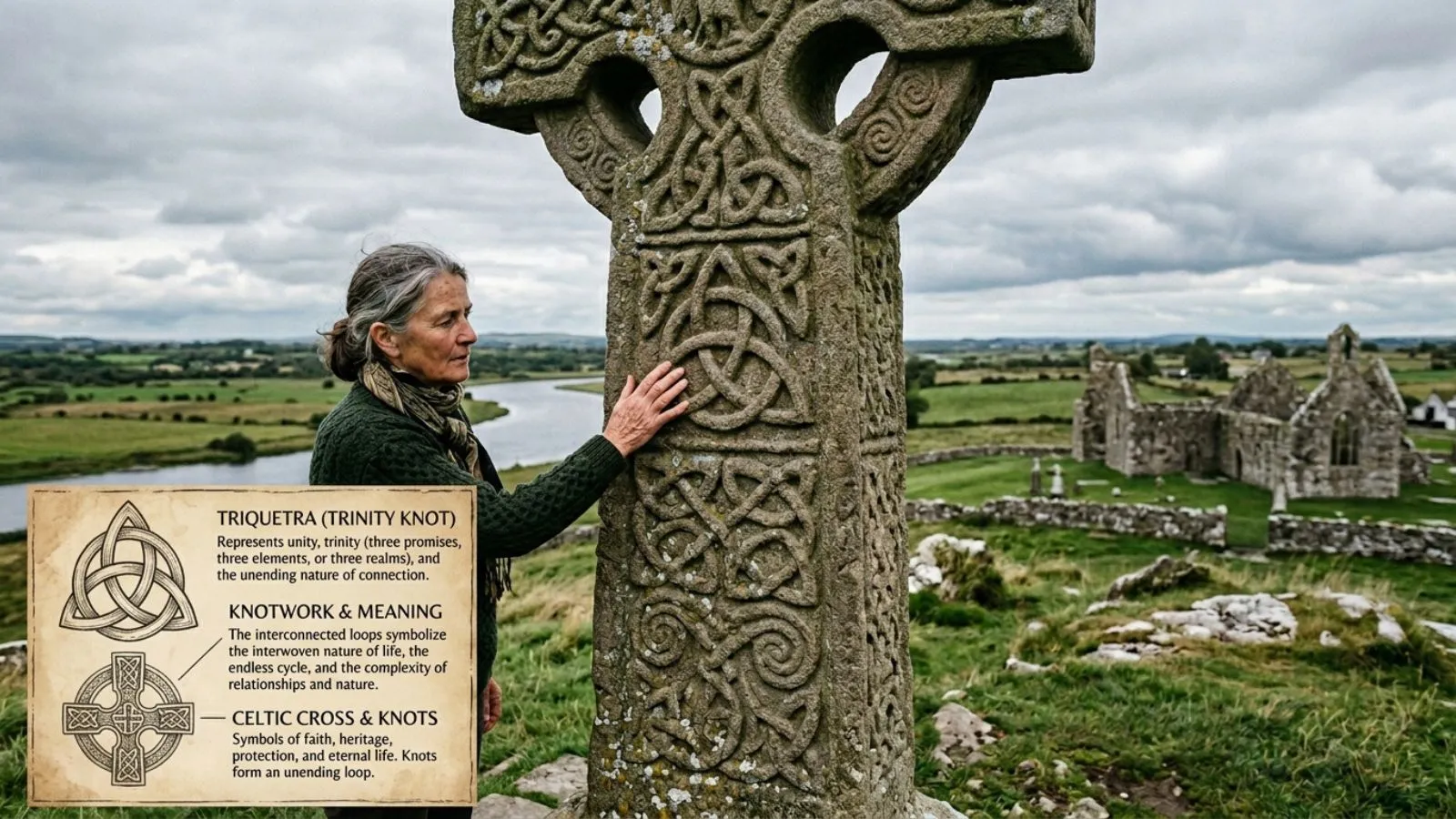
The Celtic Knot Meaning has fascinated people for centuries because of its endless loops and mysterious design. These intricate patterns, found in ancient stone carvings, manuscripts, and modern jewelry, are more than just decorative art they carry deep cultural, spiritual, and historical significance.
Originating from early Celtic civilizations in Ireland, Scotland, and Wales, Celtic knots are believed to symbolize eternity, unity, and the interconnectedness of life. Their continuous lines, with no clear beginning or end, often represent concepts like eternal love, spiritual growth, and the cycle of life and death.
Today, Celtic knots are widely used in tattoos, accessories, and artwork, making them one of the most recognizable ancient symbols in the world. In this article, we will explore the true Celtic knot meaning, its origins, different types, and why it continues to hold powerful symbolism in modern times.
What is a Celtic Knot?
A Celtic knot is a decorative pattern made of continuous, interwoven lines that loop over and under each other without a clear beginning or end. This unique structure is what makes it so visually striking and symbolically powerful. The Celtic knot meaning is deeply connected to the idea of eternity and infinity, as the endless design represents something that cannot be broken or destroyed.
These knots originated in ancient Celtic culture, where they were used as artistic expressions in stone carvings, metalwork, and illuminated manuscripts. Unlike simple geometric patterns, Celtic knots are highly intricate and often require careful craftsmanship, especially in historical artifacts found across Ireland, Scotland, and Wales.
One of the most interesting aspects of Celtic knots is that they were not just created for decoration. They were also believed to hold spiritual and symbolic significance. Many historians suggest that early Celts used these designs to represent the interconnected nature of life, where everything is linked in an endless cycle. This could include the connection between humans, nature, and the spiritual world.
Over time, Celtic knots became more refined and complex, especially during the early medieval period when they appeared in famous religious texts like the Book of Kells. Today, they continue to be widely used in modern design, tattoos, and jewelry, while still preserving their ancient meaning of unity, eternity, and spiritual connection.
Origins and History of Celtic Knots
The origins of Celtic knots can be traced back to the early Celtic civilizations, which flourished in regions such as Ireland, Scotland, and Wales over 2,000 years ago. These ancient societies were deeply connected to nature and spirituality, and their artwork often reflected these beliefs. The earliest forms of Celtic knot designs appeared in stone carvings, metal jewelry, and pottery, showing simple interlaced patterns that later evolved into more complex forms.
During the early medieval period, Celtic knots became even more prominent, especially with the rise of Insular art. This was a unique artistic style developed by Celtic monks, who used intricate knotwork to decorate religious manuscripts. One of the most famous examples is the Book of Kells, where beautifully detailed knot patterns surround sacred Christian texts. This marked an important shift, as Celtic symbols began to blend with Christian beliefs, giving the designs new layers of meaning.
In pre-Christian Celtic culture, these knots were often associated with nature, eternity, and spiritual cycles. Later, with Christian influence, they came to represent concepts such as eternal life, the Holy Trinity, and divine connection. Despite these changes, the core idea remained the same—everything is interconnected and continuous.
Core Symbolism of Celtic Knots
The Celtic Knot meaning is deeply symbolic, and one of its most important interpretations is eternity. Because Celtic knots are drawn with continuous, unbroken lines, they naturally represent something that has no beginning or end. This makes them a powerful symbol of infinite life, eternal love, and the never-ending cycles of nature.
Another key meaning of Celtic knots is unity and interconnectedness. The interwoven patterns show how different parts come together to form a complete design. In a symbolic sense, this reflects the idea that all life is connected—people, nature, time, and even the spiritual world. Nothing exists in isolation, and everything influences everything else.
Celtic knots are also associated with spiritual growth and personal development. The endless loops can represent life’s journey, where individuals go through continuous cycles of learning, change, and transformation. Many people see the knot as a reminder to stay balanced and connected to both physical and spiritual aspects of life.
In addition, Celtic knots were believed to have protective qualities in ancient times. Warriors and families often used knot designs as symbols of strength and protection against negative energy or harm. This belief added a deeper layer of meaning, making the knots not only artistic but also spiritual tools.
Popular Types of Celtic Knots and Their Meanings
Celtic knots come in many different forms, and each design carries its own unique meaning. Understanding these variations helps us explore the deeper Celtic Knot meaning and how it changes depending on the pattern.
One of the most well-known designs is the Trinity Knot (Triquetra). This knot is made of three interconnected loops and is often associated with the concepts of mind, body, and spirit. In later Christian interpretations, it also represents the Holy Trinity—Father, Son, and Holy Spirit. Its simple yet powerful structure makes it one of the most popular Celtic symbols today.
Another important design is the Celtic Love Knot, which symbolizes eternal love and emotional connection. Because of its unbroken pattern, it is often used in wedding jewelry and gifts to represent everlasting commitment between partners.
The Shield Knot is another traditional design, known for its square-like shape. Ancient Celts believed it offered protection against evil spirits and negative energy, making it a symbol of strength and safety.
The Dara Knot is inspired by the root system of the oak tree. It represents inner strength, wisdom, and endurance, reflecting the deep connection between nature and human resilience.
Celtic Knot Meaning in Different Contexts
The Celtic Knot meaning can change depending on how and where it is used. While the core symbolism of eternity and connection remains the same, different contexts give these ancient designs additional layers of interpretation.
In a spiritual context, Celtic knots are often seen as representations of the soul’s journey. Many people believe the endless loops symbolize the continuous cycle of life, death, and rebirth. They are also used in meditation and personal reflection as reminders of balance, inner peace, and spiritual growth. The unbroken lines reflect the idea that everything in the universe is connected through a higher force.
In a cultural context, Celtic knots are a strong symbol of Irish and Celtic heritage. They represent pride in ancestry, tradition, and identity. For many people with Celtic roots, wearing or displaying these knots is a way of honoring their history and staying connected to their cultural background.
In a romantic context, Celtic knots are widely used as symbols of eternal love. Their endless design makes them perfect for expressing lifelong commitment between partners. This is why they are commonly found in wedding rings, engagement jewelry, and couple tattoos. They represent love that has no end and cannot be broken.
Celtic Knots in Modern Life
Today, Celtic knots are no longer limited to ancient stones or medieval manuscripts—they have become a popular part of modern design, fashion, and personal expression. The timeless beauty of these patterns keeps the Celtic Knot meaning alive in contemporary culture, where they are used in many creative and meaningful ways.
One of the most popular uses of Celtic knots today is in tattoos. Many people choose Celtic knot designs to represent eternal love, personal strength, spiritual growth, or cultural identity. These tattoos are often deeply personal, as each pattern carries a specific symbolic message. For example, someone may choose a Trinity Knot to represent balance in life, while others may prefer a Love Knot to symbolize an unbreakable relationship.
Celtic knots are also widely used in jewelry, including rings, necklaces, bracelets, and earrings. These pieces are often gifted to symbolize commitment, friendship, or heritage. Because of their elegant and meaningful design, Celtic knot jewelry remains popular across different cultures, not just within Celtic communities.
In addition, modern fashion and art frequently incorporate Celtic knot patterns into clothing designs, logos, and decorative items. They are also seen in home décor, architecture, and even digital graphics, showing how adaptable these ancient symbols have become.
Even in pop culture, Celtic knots appear in movies, fantasy stories, and video games, often used to represent magic, mystery, or ancient wisdom.
Why Celtic Knots Are Still Popular Today
Celtic knots have remained popular for centuries because they combine striking visual design with deep symbolic meaning. Unlike many ancient symbols that have faded over time, the Celtic Knot meaning continues to resonate with people across different cultures and generations. One of the main reasons for their lasting appeal is their timeless design. The endless loops and intricate patterns create a sense of harmony, balance, and continuity that feels both artistic and meaningful.
Another reason for their popularity is their strong emotional and spiritual symbolism. Many people are drawn to Celtic knots because they represent concepts such as eternity, unity, love, and protection. In a fast-changing modern world, these ideas feel grounding and comforting. Whether used in tattoos, jewelry, or art, Celtic knots allow individuals to express personal values and beliefs in a subtle yet powerful way.
Cultural identity also plays an important role in their continued use. For people of Irish, Scottish, or Welsh heritage, Celtic knots are a proud reminder of their ancestry and traditions. They serve as a visual connection to ancient roots and history, keeping cultural heritage alive in a modern setting.
Additionally, Celtic knots have adapted well to modern design trends. Their elegant and symmetrical patterns fit perfectly into fashion, branding, and digital art. Designers often use them because they are both aesthetically pleasing and rich in meaning.
How to Choose the Right Celtic Knot Design
Choosing the right Celtic knot design depends on both personal meaning and visual preference. Since the Celtic Knot meaning varies across different patterns, it’s important to select a design that reflects your intention or story. Each knot carries its own symbolism, so the first step is understanding what you want the design to represent in your life.
If you are looking for a symbol of love or commitment, the Celtic Love Knot is a popular choice. It represents eternal connection and is often used in relationship-based jewelry or couple tattoos. For those who want to express balance and spiritual awareness, the Trinity Knot is a strong option, symbolizing mind, body, and spirit.
People who value strength and resilience may prefer the Dara Knot, which is inspired by the deep roots of the oak tree. It reflects inner power, wisdom, and endurance. On the other hand, if protection and safety are your focus, the Shield Knot is traditionally believed to guard against negative energy and harm.
Design style is also important. Some Celtic knots are simple and minimal, while others are highly detailed and complex. Beginners often prefer simpler patterns, especially for tattoos or small jewelry pieces, while more intricate designs are chosen for larger artwork or statement pieces.
Finally, consider where the design will be used—whether on skin, metal, fabric, or digital art. The placement and size can affect how the knot looks and feels.
Common Misconceptions About Celtic Knots
Although Celtic knots are widely recognized today, there are still several misconceptions about their true meaning and origin. Understanding these misunderstandings helps clarify the real Celtic Knot meaning and prevents confusion between historical facts and modern interpretations.
One common misconception is that Celtic knots are purely decorative designs with no deeper meaning. In reality, these patterns were deeply symbolic in ancient Celtic culture. They often represented concepts like eternity, unity, and spiritual connection, rather than just serving as artistic decoration.
Another misunderstanding is that all Celtic knots are religious symbols. While some designs were later adapted into Christian art, especially in medieval manuscripts, not every knot carries a religious meaning. Many were originally rooted in pre-Christian Celtic beliefs connected to nature, life cycles, and spiritual harmony.
People also often confuse Celtic knots with other ancient knot designs, such as Norse or Viking patterns. While they may look similar due to their interwoven styles, they come from different cultures and carry different symbolic meanings. Celtic knots are specifically tied to Celtic heritage, particularly from Ireland, Scotland, and Wales.
Another misconception is that each knot has only one fixed meaning. In reality, interpretations can vary depending on culture, context, and personal belief. For example, a Trinity Knot may represent the Holy Trinity in Christianity, but also mind, body, and spirit in a more general spiritual sense.
Frequently Asked Questions (FAQ) About Celtic Knot Meaning
1. What is the meaning of a Celtic knot?
The Celtic Knot meaning is mainly associated with eternity, unity, and interconnectedness. Because the design has no beginning or end, it symbolizes endless cycles such as life, love, and spiritual connection.
2. What do Celtic knots represent spiritually?
Spiritually, Celtic knots are often seen as symbols of balance and harmony. They represent the connection between the physical and spiritual worlds, as well as personal growth, inner peace, and life’s continuous journey.
3. Are Celtic knots Irish or Scottish?
Celtic knots are part of broader Celtic culture, which includes Ireland, Scotland, Wales, and other ancient Celtic regions. However, they are most strongly associated with Irish heritage due to their frequent use in Irish art and manuscripts.
4. What does a Celtic knot tattoo mean?
A Celtic knot tattoo can have many meanings depending on the design. It may represent eternal love, strength, protection, or spiritual growth. Each knot type carries its own specific symbolism.
5. What is the most popular Celtic knot?
The Trinity Knot (Triquetra) is one of the most popular Celtic knots. It symbolizes mind, body, and spirit, and is also associated with eternal cycles and spiritual unity.
6. Are Celtic knots religious?
Some Celtic knots were later adapted into Christian symbolism, especially in medieval art. However, many originated from pre-Christian Celtic culture and are not strictly religious.
7. Why are Celtic knots still popular today?
They remain popular because they combine beautiful design with deep meaning. People use them in jewelry, tattoos, and art to express identity, love, and spiritual connection.
Conclusion
The Celtic Knot meaning goes far beyond its beautiful and intricate design. These ancient patterns represent powerful ideas such as eternity, unity, love, and the interconnectedness of all life. Originating from early Celtic culture, they have survived for centuries and continue to hold deep symbolic value in both historical and modern contexts.
From spiritual beliefs and cultural identity to romantic symbolism and personal expression, Celtic knots remain meaningful across many areas of life. Their endless loops remind us that life is a continuous journey with no clear beginning or end, where everything is connected in some way.
Today, whether used in tattoos, jewelry, or artwork, Celtic knots still carry the same timeless message they did thousands of years ago. They are not just decorative designs they are symbols of heritage, meaning, and human connection that continue to inspire people around the world.

Etalia ya Mara is a passionate storyteller and creative writer, Pickupsy.com weaving captivating narratives that inspire and entertain readers across the globe. With a unique voice and a love for exploring human emotions and experiences, Etalia brings every story to life with authenticity and heart.
You can follow Etalia’s latest writings and insights at PickuPsy.com, where stories come alive and readers connect with the magic of words.