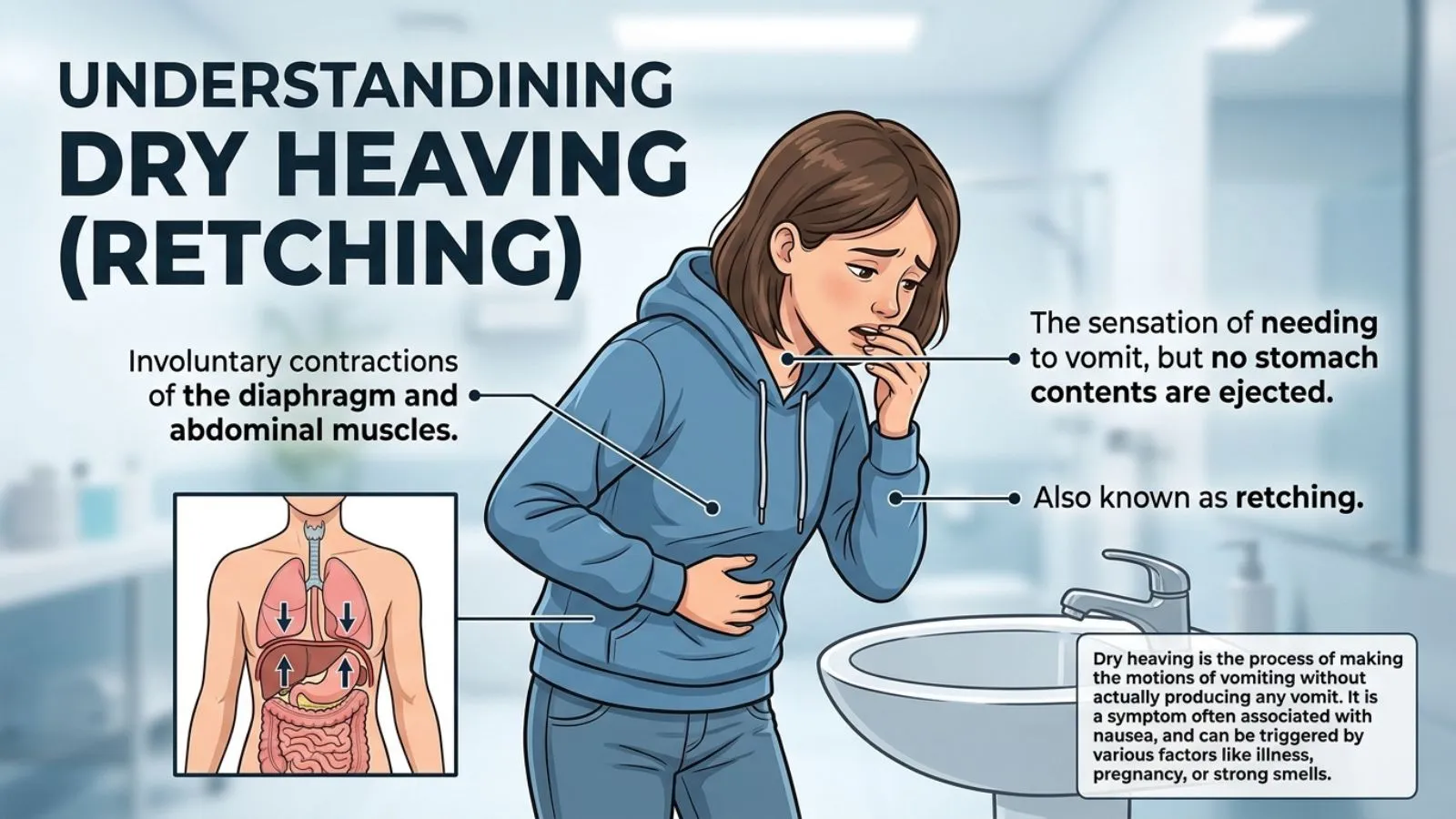
Dry heaving is a term many people come across when they experience nausea without actually vomiting. If you are searching for the “dry heaving meaning,” it simply refers to the repeated feeling of vomiting where your body tries to throw up, but nothing comes out.
This condition can be uncomfortable and sometimes alarming, especially when it happens suddenly or repeatedly. Dry heaving can occur due to several reasons such as stomach infections, food poisoning, motion sickness, dehydration, or even stress and anxiety.
It is commonly experienced by people of all ages and may appear alongside symptoms like nausea, sweating, or dizziness. While in many cases it is temporary and harmless, frequent episodes may indicate an underlying health issue that needs attention. In this article, we will explore the full meaning of dry heaving, its causes, symptoms, and effective ways to manage or prevent it.
What Does Dry Heaving Mean?
Dry heaving refers to the body’s involuntary reflex of trying to vomit without producing any stomach contents. In simple terms, it is the feeling of vomiting or gagging where nothing actually comes out. This happens because your brain sends signals to your stomach muscles and diaphragm to contract as if you are about to vomit, but the stomach is either empty or not producing anything to expel.
Medically, dry heaving is also known as “retching.” It is part of the body’s natural defense mechanism, designed to remove harmful substances from the stomach. However, when there is nothing left in the stomach, the same reflex continues, causing repeated uncomfortable contractions.
The meaning of dry heaving is often misunderstood because many people confuse it with regular vomiting. The key difference is that vomiting involves the expulsion of stomach contents, while dry heaving does not. Even though nothing comes out, the sensation can still be strong, painful, and exhausting.
Dry heaving can occur for many reasons, including nausea, digestive issues, motion sickness, or emotional stress. In some cases, it may happen after vomiting when the stomach is already empty but the body continues the reflex.
Understanding the dry heaving meaning is important because it helps you identify whether it is a temporary reaction or a symptom of an underlying condition. While occasional dry heaving is usually not serious, frequent or persistent episodes should not be ignored, especially if they are accompanied by other symptoms like fever, abdominal pain, or dehydration.
What Happens During Dry Heaving?
When dry heaving occurs, your body goes through the same physical process as vomiting, but without expelling any stomach contents. It starts in the brain, where the vomiting center sends signals to the muscles of the abdomen, diaphragm, and esophagus. These muscles then contract forcefully, creating the sensation that you are about to throw up.
During this process, your diaphragm moves downward while your abdominal muscles tighten, increasing pressure inside the stomach. At the same time, the lower esophageal sphincter opens, which normally allows vomit to pass through. However, if the stomach is empty, there is nothing to release, resulting in repeated retching motions.
You may also notice other body reactions such as increased saliva production, sweating, rapid heartbeat, or a feeling of nausea rising in your throat. These symptoms are part of the body’s protective response to perceived irritation or toxins.
Dry heaving can be triggered even when there is no actual harmful substance in the stomach. This is why it often occurs with motion sickness, anxiety, or after a recent episode of vomiting when the stomach has already been emptied.
Although it may feel alarming, dry heaving is usually a temporary reflex. However, repeated or severe episodes can strain the abdominal muscles and leave you feeling weak or exhausted.
Understanding what happens during dry heaving helps clarify that it is not just “feeling sick,” but a coordinated reflex involving the brain and digestive system working together. Recognizing this process can also help you better manage triggers and know when medical attention may be needed.
Dry Heaving vs Vomiting: Understanding the Difference
Dry heaving and vomiting are closely related, but they are not the same condition. Both involve the body’s natural “vomiting reflex,” yet the key difference lies in whether or not stomach contents are expelled.
Vomiting occurs when the stomach forcefully pushes out its contents through the mouth. This usually includes food, liquid, or digestive fluids. It often provides relief because the body is removing something it considers harmful or irritating.
Dry heaving, on the other hand, is the same physical reflex without any material being released. In this case, the stomach may already be empty, or there may not be enough substance to bring up. As a result, the body continues the retching motion, but nothing comes out.
Another important difference is how each condition feels afterward. Vomiting can sometimes relieve nausea, while dry heaving often leaves a person feeling exhausted, sore in the abdominal area, and frustrated because the discomfort continues without relief.
Both conditions can share similar triggers such as food poisoning, viral infections, motion sickness, alcohol consumption, or strong smells. However, dry heaving is more commonly associated with an empty stomach, anxiety, or repeated vomiting episodes where the stomach has already been cleared.
While occasional vomiting or dry heaving is usually not serious, persistent episodes of either condition may signal an underlying problem like gastrointestinal disorders, infections, or severe dehydration.
Understanding the difference between dry heaving vs vomiting is important because it helps in identifying the severity of symptoms and deciding when medical attention may be necessary. Recognizing whether your body is expelling contents or not can provide clues about the underlying cause and guide proper treatment.
Common Causes of Dry Heaving
Dry heaving can be triggered by a wide range of physical and emotional factors. One of the most common causes is gastrointestinal irritation, such as viral infections (like stomach flu) or food poisoning. In these cases, the stomach becomes inflamed, and the body attempts to remove harmful substances through vomiting or retching. If the stomach is already empty, dry heaving may occur instead.
Digestive issues like acid reflux (GERD) and gastritis can also lead to dry heaving. When stomach acid flows back into the esophagus, it irritates the lining and triggers the gag reflex, even when there is nothing to vomit.
Motion sickness is another frequent cause. Traveling by car, boat, or airplane can confuse the inner ear, which controls balance, leading to nausea and dry heaving.
Dehydration and low blood sugar may also contribute, especially if the body becomes weak or lacks essential fluids and nutrients.
Certain medications, particularly those that affect the stomach or central nervous system, may cause nausea and dry heaving as a side effect.
In some cases, emotional factors such as stress, anxiety, or panic attacks play a major role. The gut and brain are closely connected, and intense emotions can directly trigger nausea and the urge to vomit.
Excessive alcohol consumption is another well-known trigger, as it irritates the stomach lining and disrupts normal digestive function.
Less commonly, conditions like migraines, pregnancy (morning sickness), or inner ear disorders may also cause repeated dry heaving.
Understanding these causes is important because it helps identify whether dry heaving is a temporary reaction or a sign of an underlying health issue that may require treatment.
Can Stress and Anxiety Cause Dry Heaving?
Yes, stress and anxiety can directly cause dry heaving, and it is more common than many people realize. The connection between the brain and the digestive system, often called the gut-brain axis, plays a major role in this reaction. When a person experiences intense stress, fear, or anxiety, the brain releases stress hormones like adrenaline and cortisol. These chemicals can affect digestion and trigger nausea, gagging, or dry heaving.
During anxiety or panic attacks, the body goes into a “fight or flight” response. This response prepares the body for danger by speeding up the heart rate, tightening muscles, and slowing down digestion. As a result, the stomach becomes more sensitive, and even normal sensations may feel like nausea. This can lead to the urge to vomit or repeated dry heaving even when there is no physical illness.
People with generalized anxiety disorder or high stress levels may notice dry heaving in specific situations, such as before exams, public speaking, traveling, or during emotional distress. In some cases, the feeling of nausea itself can increase anxiety, creating a cycle that worsens the symptoms.
Unlike infections or digestive disorders, anxiety-related dry heaving usually does not involve fever or severe abdominal pain. Instead, it is often accompanied by symptoms like sweating, trembling, rapid heartbeat, or a feeling of tightness in the chest or throat.
Managing stress is key to reducing anxiety-induced dry heaving. Techniques such as deep breathing, mindfulness, hydration, and relaxation exercises can help calm the nervous system. In more severe cases, therapy or medical support may be needed.
Understanding this connection is important because it shows that dry heaving is not always caused by stomach problems—it can also be a response to emotional and psychological stress.
Symptoms That Often Occur With Dry Heaving
Dry heaving rarely happens on its own. In most cases, it is accompanied by a range of uncomfortable symptoms that can help identify the underlying cause. One of the most common symptoms is nausea, which often appears before or during dry heaving episodes. This feeling of sickness in the stomach may come and go or remain constant depending on the trigger.
Another frequent symptom is a tightening or cramping sensation in the stomach and chest area. This happens due to strong contractions of the abdominal muscles during the retching reflex. Many people also experience increased saliva production, a natural response that prepares the mouth for vomiting.
Sweating is another common sign, especially when dry heaving is caused by motion sickness, anxiety, or infections. Along with this, individuals may feel dizzy or lightheaded due to changes in blood pressure or dehydration.
Weakness and fatigue can also develop, particularly if dry heaving occurs repeatedly. The physical strain on the body, combined with a lack of food or fluids, can leave a person feeling drained.
Some people report headaches or a general feeling of discomfort during or after dry heaving episodes. Loss of appetite is also common, as the stomach becomes sensitive and food may seem unappealing.
In certain cases, dry heaving may be accompanied by more serious symptoms such as abdominal pain, fever, or signs of dehydration like dry mouth and reduced urination. These symptoms may indicate an underlying medical condition that requires attention.
Understanding these accompanying symptoms is important because they help distinguish between a mild, temporary issue and a more serious health problem that may need treatment.
How to Stop Dry Heaving Quickly
When dry heaving starts, the goal is to calm the stomach and reduce the body’s vomiting reflex as quickly as possible. One of the simplest and most effective methods is to take slow, deep breaths. Breathing in through the nose and out through the mouth helps relax the diaphragm and reduces the intensity of retching.
Sipping small amounts of water can also help. Large gulps may worsen nausea, but tiny sips help keep the body hydrated and soothe the throat and stomach lining. In some cases, electrolyte drinks can be even more effective, especially if dehydration is involved.
Resting in a comfortable position is important. Sitting upright or lying on your side can help prevent further irritation and reduce pressure on the stomach. Avoid lying flat on your back, as this may increase nausea.
Ginger is a well-known natural remedy that may help settle the stomach. Drinking ginger tea or chewing a small piece of ginger can reduce nausea and calm dry heaving symptoms in many people. Peppermint tea may also provide similar relief.
Avoiding strong smells, spicy foods, and heavy meals is essential during an episode, as these can trigger or worsen the reflex. Fresh air or stepping outside may also help reduce nausea.
In some cases, over-the-counter anti-nausea medications may be helpful, but they should only be used if necessary and according to instructions.
If dry heaving is caused by anxiety, calming techniques such as mindfulness, grounding exercises, or focusing on slow breathing can help stop the cycle.
Understanding how to respond quickly can make dry heaving more manageable and prevent it from becoming more severe or prolonged.
When Should You See a Doctor for Dry Heaving?
Dry heaving is often temporary and harmless, but there are situations where it may indicate a more serious health problem. Knowing when to seek medical attention is important to prevent complications and address any underlying condition early.
You should see a doctor if dry heaving lasts for more than 24 to 48 hours without improvement. Persistent episodes may suggest an infection, digestive disorder, or other medical issue that needs proper evaluation.
Medical attention is also necessary if dry heaving is accompanied by severe abdominal pain. This could indicate conditions such as gastritis, appendicitis, or other gastrointestinal problems that require immediate care.
Another warning sign is dehydration. If you notice symptoms like extreme thirst, dry mouth, dark urine, dizziness, or very low urine output, it may mean your body is losing too much fluid due to repeated retching.
You should also seek help if there is blood in vomit or saliva during dry heaving. This could point to irritation or injury in the stomach or esophagus and should not be ignored.
High fever along with dry heaving may indicate an infection that needs medical treatment, especially if it is combined with weakness or ongoing nausea.
In children, older individuals, and refer women, dry heaving should be monitored more closely, as they are more vulnerable to dehydration and complications.
If dry heaving happens frequently without a clear reason, such as anxiety, motion sickness, or known triggers, it is important to get a proper diagnosis.
Understanding when to see a doctor ensures that serious conditions are not overlooked and that appropriate treatment is given at the right time.
Home Remedies for Dry Heaving
Home remedies can be very effective in managing mild or occasional dry heaving, especially when it is caused by temporary factors like indigestion, motion sickness, or mild anxiety. One of the most commonly used remedies is ginger. Ginger has natural anti-nausea properties that help calm the stomach and reduce the urge to retch. It can be consumed as ginger tea, ginger candies, or even small raw slices.
Peppermint is another helpful remedy. Peppermint tea or peppermint oil can relax the stomach muscles and reduce nausea. Its soothing aroma may also help ease the gag reflex in some people.
Staying hydrated is essential. Drinking small sips of water or electrolyte solutions helps prevent dehydration and keeps the digestive system stable. However, it is important to avoid drinking large amounts at once, as this may worsen symptoms.
Eating bland foods such as crackers, toast, bananas, or rice can also help settle the stomach once the symptoms begin to improve. These foods are gentle on the digestive system and reduce irritation.
Fresh air can make a significant difference during dry heaving episodes. Stepping outside or opening a window may help reduce nausea, especially if strong smells or poor ventilation are triggers.
Acupressure is another technique some people find helpful. Applying gentle pressure on the wrist area (commonly known as the P6 point) may reduce nausea and vomiting sensations.
Rest is equally important. Allowing the body to relax in a comfortable position helps reduce strain on the stomach muscles and gives the digestive system time to recover.
While home remedies can provide relief, they are most effective for mild cases. If symptoms persist or worsen, medical advice should be sought to rule out underlying conditions.
Foods and Drinks to Avoid
When experiencing dry heaving, certain foods and drinks can make symptoms worse and should be avoided until your stomach settles. Spicy foods are one of the main triggers because they irritate the stomach lining and can increase nausea and the gag reflex. Even small amounts of chili, hot sauces, or heavily spiced meals may worsen discomfort.
Greasy and fried foods should also be avoided. These foods are harder to digest and can put extra pressure on the stomach, increasing the likelihood of nausea and dry heaving. Foods high in fat slow down digestion, which may prolong symptoms.
Caffeinated beverages such as coffee, energy drinks, and strong tea can also irritate the stomach and contribute to dehydration. Caffeine may further stimulate the digestive system in a way that worsens nausea for some individuals.
Alcohol is another major trigger. It irritates the stomach lining, dehydrates the body, and can disrupt normal digestive processes, all of which may lead to dry heaving or make existing symptoms more severe.
Highly processed foods like chips, instant noodles, and packaged snacks often contain additives and preservatives that can be harsh on a sensitive stomach. These should be avoided during recovery.
Carbonated drinks may also cause discomfort by increasing gas and bloating, which can worsen the feeling of nausea.
Instead of these foods, it is better to stick to bland, easy-to-digest options like toast, rice, bananas, and plain crackers. Clear fluids and electrolyte drinks are also recommended to maintain hydration.
Being mindful of dietary choices during dry heaving episodes can significantly reduce discomfort and help the stomach recover faster. Avoiding triggers is an important step in managing and preventing further episodes.
How to Prevent Dry Heaving
Preventing dry heaving mainly involves identifying triggers and maintaining healthy habits that support the digestive system. One of the most important steps is staying properly hydrated. Drinking enough water throughout the day helps keep the stomach stable and reduces the risk of nausea caused by dehydration.
Eating balanced meals at regular intervals is also essential. Skipping meals can lead to low blood sugar, which may trigger nausea and dry heaving. It is better to eat smaller, frequent meals instead of large heavy portions that may overload the stomach.
Managing stress plays a major role in prevention. Since anxiety and emotional stress can directly trigger dry heaving, practicing relaxation techniques such as deep breathing, meditation, or light exercise can help keep the nervous system calm. Reducing stress levels also improves overall gut health.
Avoiding known triggers is another key step. This may include limiting spicy or greasy foods, avoiding excessive alcohol, and staying away from strong odors that can provoke nausea. For people prone to motion sickness, sitting in stable positions during travel or focusing on the horizon can help reduce symptoms.
Getting enough rest is equally important. Fatigue can weaken the body and make the digestive system more sensitive, increasing the likelihood of nausea and dry heaving episodes.
Regular physical activity, when done in moderation, also supports healthy digestion and reduces stress, both of which help prevent symptoms.
In some cases, underlying medical conditions like acid reflux or gastritis may need treatment to fully prevent recurring dry heaving. Addressing these issues with a healthcare professional can significantly reduce future episodes.
By maintaining a healthy lifestyle and being aware of triggers, most people can effectively reduce or even prevent dry heaving from occurring.
Frequently Asked Questions About Dry Heaving Meaning
What is the simple meaning of dry heaving?
Dry heaving means the body tries to vomit, but nothing comes out. It is also called retching and usually happens when the stomach is empty or irritated.
Is dry heaving dangerous?
In most cases, dry heaving is not dangerous and is temporary. However, frequent or severe episodes may indicate an underlying condition such as infection, acid reflux, or dehydration.
Why do I keep dry heaving but not vomiting?
This usually happens when your stomach is empty but the vomiting reflex is still active. It can be triggered by nausea, anxiety, motion sickness, or digestive issues.
Can anxiety cause dry heaving?
Yes, anxiety and stress can trigger dry heaving due to the gut-brain connection. Emotional stress can activate the body’s nausea response even without physical illness.
How long does dry heaving last?
Dry heaving usually lasts a few minutes to a few hours, depending on the cause. If it continues for more than a day, medical advice is recommended.
What helps stop dry heaving quickly?
Slow breathing, sipping water, ginger tea, peppermint, and resting in an upright position can help reduce symptoms quickly.
Can dehydration cause dry heaving?
Yes, dehydration can upset the stomach and trigger nausea and dry heaving, especially if the body lacks fluids and electrolytes.
Is dry heaving a sign of pregnancy?
It can be. Many refer women experience dry heaving as part of morning sickness, especially during early pregnancy.
When should I worry about dry heaving?
You should seek medical help if dry heaving is persistent, severe, or accompanied by fever, blood, or signs of dehydration.
Can dry heaving happen without illness?
Yes, it can happen due to stress, motion sickness, strong smells, or an empty stomach without any serious illness.
Conclusion:
Dry heaving is a common condition where the body tries to vomit but nothing comes out. Understanding the dry heaving meaning helps make it clear that it is usually a reflex triggered by nausea.
Stomach irritation, motion sickness, stress, or other digestive issues. In most cases, it is temporary and not a serious health concern, especially when it happens occasionally and resolves on its own.
However, repeated or severe episodes should not be ignored, as they may point to underlying conditions such as infections, acid reflux, dehydration, or anxiety disorders. Recognizing the cause is the key to effective management and prevention.
Simple home remedies like staying hydrated, using ginger or peppermint, resting, and avoiding trigger foods can often provide quick relief. At the same time, maintaining a healthy lifestyle and managing stress can significantly reduce the chances of recurrence.

Etalia ya Mara is a passionate storyteller and creative writer, weaving captivating narratives that inspire and entertain readers across the globe. With a unique voice and a love for exploring human emotions and experiences, Etalia brings every story to life with authenticity and heart.
You can follow Etalia’s latest writings and insights at PickuPsy.com, where stories come alive and readers connect with the magic of words.