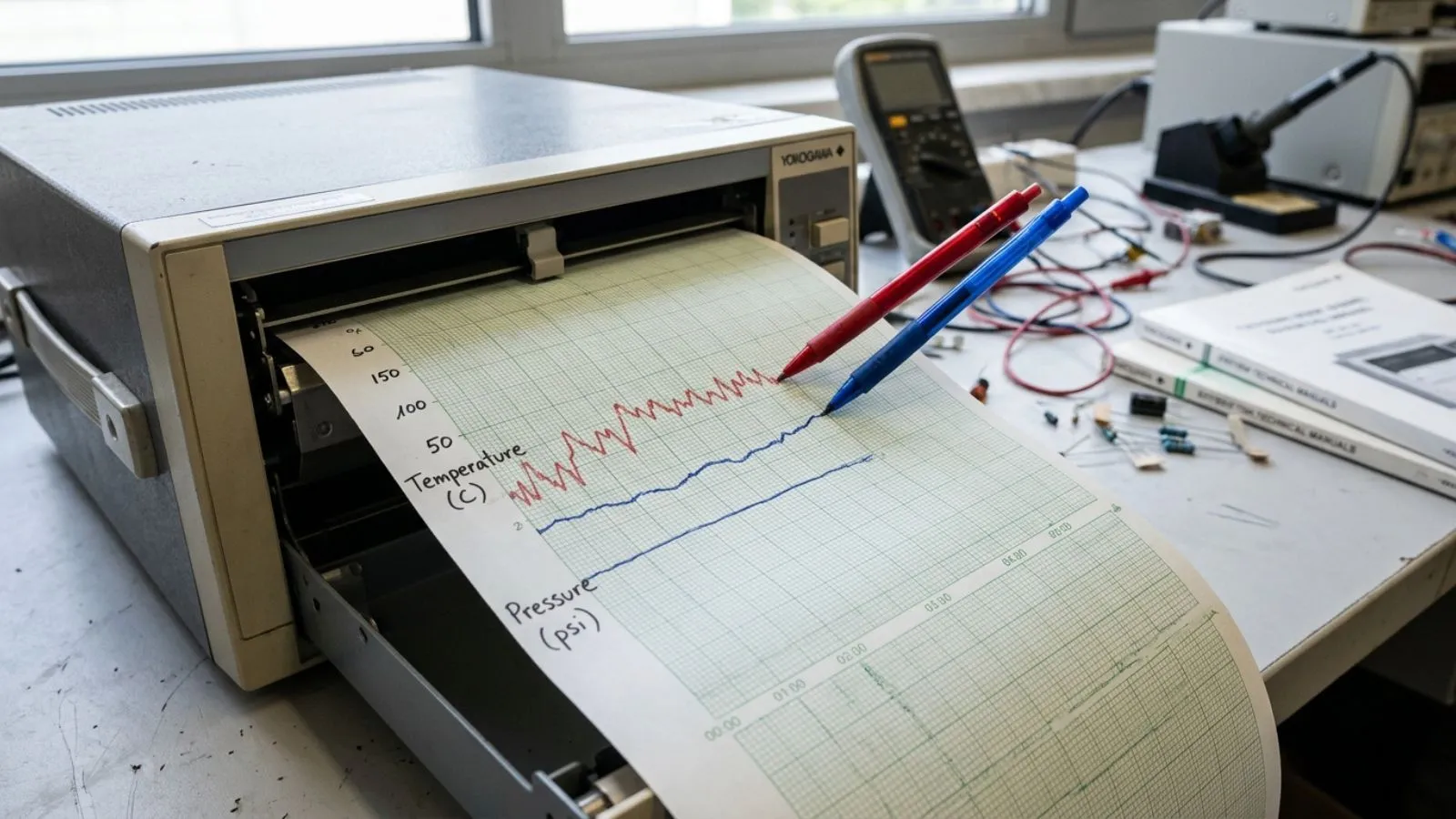
A strip chart is one of the simplest yet most effective tools in data visualization, widely used in statistics, data science, and research analysis. It represents individual data points along a single axis.
Allowing users to clearly observe how values are distributed without heavy summation or grouping. Unlike complex charts that hide raw data, a strip chart keeps every observation visible, making it easier to detect patterns, clusters, and outliers in a dataset.
Strip charts are commonly used in scientific experiments, engineering measurements, and business analytics where understanding real data variation is important. They are especially useful for small to medium-sized datasets because they provide a clean, direct view of all values.
In this article, you will learn the meaning of strip charts, how they work, their types, real-world applications, and how they compare with other visualization methods. By the end, you’ll clearly understand why strip charts remain a fundamental tool in modern data analysis.
What is a Strip Chart?
A strip chart is a basic type of data visualization used to display individual data points along a single axis, usually the horizontal or vertical axis. Each dot or mark on the chart represents one observation from a dataset, making it a direct way to view raw data without summarization or grouping. This makes strip charts especially useful in statistics and data analysis, where understanding the exact distribution of values is important.
Unlike more complex graphs, a strip chart does not combine data into ranges or categories. Instead, it preserves every single data point, allowing analysts to see the full structure of the dataset. This helps in identifying patterns such as clustering, spread, and outliers.
In most cases, strip charts are used for one-dimensional data, meaning only one variable is being analyzed at a time. For example, if you measure the test scores of students in a class, a strip chart will show each student’s score as a separate point along a number line. This gives a clear visual understanding of how the scores are distributed.
Strip charts are often compared with scatter plots, but the key difference is that scatter plots use two variables (x and y-axis), while strip charts typically use only one variable. Because of their simplicity, strip charts are widely used in research, science experiments, and early-stage data exploration where clarity is more important than complexity.
How Does a Strip Chart Work?
A strip chart works by plotting individual data points along a single axis to visually represent the distribution of a dataset. Each point corresponds to one observation, and all values are placed in order based on their magnitude along either the horizontal or vertical axis. This simple structure makes it easy to understand how data is spread without needing complex calculations or summaries.
The process begins with collecting raw data, which could be anything from test scores, temperatures, or experimental readings. Once the data is ready, each value is plotted as a separate dot on the chart. If two or more values are the same or very close, they may overlap, which is why a technique called jittering is often used. Jittering slightly adjusts the position of points to make them more visible without changing the overall meaning of the data.
The scale of the axis is also very important in a strip chart. A well-chosen scale ensures that patterns such as clustering or gaps in the data are easy to spot. For example, if many points are grouped closely together, it indicates a concentration of values in that range.
In advanced cases, strip charts can also be grouped by categories, allowing comparisons between different datasets side by side. This makes them useful for analyzing variations across groups, such as comparing results from different experiments or populations. Overall, the working principle of a strip chart is simple, but it provides powerful insight into raw data distribution.
Types of Strip Charts
Strip charts come in several variations, each designed to improve readability or handle different types of data analysis needs. The most basic form is the simple strip chart, where each data point is plotted individually along a single axis. This version is best suited for small datasets where overlap between points is minimal and the goal is to observe raw distribution clearly.
A more advanced version is the jittered strip chart. In this type, small random variations are added to the position of each data point to prevent overlap when many values are close together. Although the data values remain unchanged, jittering improves visibility and helps reveal hidden patterns in dense datasets.
Another common type is the grouped strip chart, which is used when comparing multiple categories. In this format, data points are separated into groups and displayed side by side, making it easier to compare distributions across different conditions, such as test results from different classes or experimental groups.
A more advanced and visually refined variation is the beeswarm-style strip chart. This type automatically adjusts the positioning of points based on density, arranging them in a way that avoids overlap while preserving the shape of the distribution. It provides a clearer view of data concentration and spread compared to basic strip charts.
Each type of strip chart serves a specific purpose, but they all share the same core idea: representing individual data points clearly. Choosing the right type depends on dataset size, complexity, and the level of detail needed for analysis.
Strip Chart vs Scatter Plot
Strip charts and scatter plots are both popular data visualization techniques, but they serve different purposes and are used in different analytical situations. Understanding the difference between them is important when choosing the right chart for your data.
A strip chart is used to display a single variable along one axis. Each point represents an individual observation, and the main goal is to show how values are distributed. It focuses on one-dimensional data, making it ideal for analyzing patterns such as clustering, spread, and outliers within a single dataset.
On the other hand, a scatter plot uses two variables, typically plotted on the X and Y axes. Each point represents a relationship between two different measurements. For example, a scatter plot can show the relationship between study time and exam scores, helping to identify correlations or trends between variables.
The key difference lies in complexity and purpose. Strip charts are simpler and more focused on raw distribution, while scatter plots are used to study relationships between variables. Because of this, strip charts are often used in early data exploration, whereas scatter plots are used in deeper statistical analysis.
Another difference is how the data is displayed. Strip charts often include jittering to avoid overlapping points, especially when values are repeated. Scatter plots, however, naturally spread points across two dimensions, reducing overlap issues in many cases.
In summary, strip charts are best for understanding distribution of a single variable, while scatter plots are better for analyzing relationships between two variables. Choosing the right one depends on your analysis goal.
Advantages of Strip Charts
Strip charts offer several important advantages that make them a valuable tool in data visualization and statistical analysis. One of the biggest benefits is their simplicity. Because each data point is shown individually, strip charts are easy to read and interpret, even for beginners who are new to data analysis. This makes them ideal for educational purposes and basic exploratory data analysis.
Another major advantage is that strip charts preserve raw data. Unlike histograms or box plots, which summarize data into groups or statistical values, strip charts display every single observation. This allows analysts to see the full dataset without any loss of information, making patterns more transparent.
Strip charts are also excellent for identifying outliers. Since each point is visible, unusual values that fall far from the main cluster can be quickly spotted. This is especially useful in scientific research and quality control, where detecting anomalies is important.
Additionally, strip charts help in understanding data distribution. They clearly show how values are spread across a range, whether they are evenly distributed, clustered, or skewed toward one side. This helps in making better decisions during data analysis.
They are also lightweight and easy to create using tools like Excel, Python, or R, which makes them accessible for both beginners and professionals. Despite their simplicity, strip charts provide powerful insights when used with small to medium-sized datasets.
Overall, strip charts combine clarity, simplicity, and detailed data visibility, making them a strong choice for initial data exploration and basic statistical interpretation.
Limitations of Strip Charts
Despite their usefulness, strip charts also have several limitations that can affect how well they perform in data analysis. One of the main drawbacks is overlapping data points. When many values are similar or identical, the points can stack on top of each other, making it difficult to see the true distribution of the dataset. Although techniques like jittering can reduce this issue, they do not completely solve it.
Another limitation is that strip charts are not suitable for large datasets. As the number of data points increases, the chart becomes crowded and visually cluttered. This reduces readability and makes it harder to extract meaningful insights. In such cases, other visualization methods like histograms or box plots are more effective.
Strip charts are also limited in terms of dimensional analysis. They typically represent only one variable at a time, which means they cannot directly show relationships between two or more variables. This makes them less useful for advanced statistical analysis where multiple factors need to be compared.
In addition, strip charts do not summarize data statistically. Unlike box plots that show median, quartiles, and spread, strip charts only display raw values. While this is useful for transparency, it can make interpretation slower when dealing with complex datasets.
Finally, strip charts may require careful scaling and formatting to avoid misleading visuals. Poorly designed strip charts can distort perception of density or variation.
Overall, while strip charts are excellent for simple and small datasets, their limitations make them less effective for large-scale or multi-variable data analysis.
Applications of Strip Charts
Strip charts are widely used in many fields where understanding raw data distribution is important. Their simplicity and clarity make them suitable for both academic research and practical real-world analysis.
In scientific research, strip charts are commonly used to display experimental results. Researchers often need to compare measurements from different trials, and strip charts help them see how values vary across samples. This makes it easier to identify patterns, consistency, or unexpected results in experiments.
In data science and statistics, strip charts are used during the early stages of data exploration. Analysts use them to quickly understand how a dataset is distributed and to detect outliers or unusual values. This helps in deciding which statistical methods or models should be applied next.
In business analytics, strip charts can be used to compare performance metrics such as sales figures, customer ratings, or production outputs. By plotting individual values, businesses can easily see variations across teams, regions, or time periods.
In engineering and quality control, strip charts help monitor product measurements and manufacturing consistency. Engineers use them to detect defects or irregularities in production processes, ensuring better quality control.
They are also used in healthcare and biology, where patient data, clinical trial results, or biological measurements need to be analyzed. Strip charts make it easier to observe variation among patients or test groups.
How to Create a Strip Chart
Creating a strip chart is relatively simple and can be done using several tools such as Excel, Python, R, or online visualization platforms. The process mainly involves plotting individual data points along a single axis to represent the distribution of a dataset.
In Microsoft Excel, you can create a basic strip chart by first entering your data into a column. Then, you can use a scatter plot or dot plot option and adjust the axis settings to display values clearly. While Excel does not have a direct “strip chart” option, simple modifications can help achieve a similar visualization.
In Python, strip charts are commonly created using libraries like Matplotlib or Seaborn. In Matplotlib, you can plot data points using a scatter function and align them along one axis. Seaborn also provides functions that allow jittering, which helps reduce overlap and improves readability when data points are dense.
In R programming, strip charts are even easier to create because the language includes a built-in function called stripchart(). This function allows users to directly plot one-dimensional data with options for grouping, jittering, and customization.
For users who prefer no-code solutions, many online data visualization tools offer drag-and-drop features to create strip charts instantly. These tools are useful for beginners who want quick results without programming knowledge.
Regardless of the tool used, the key steps remain the same: prepare your dataset, choose a single variable, plot individual points, and adjust spacing or jittering if necessary. With these steps, you can easily create a clear and informative strip chart for data analysis.
Interpreting a Strip Chart
Interpreting a strip chart involves carefully analyzing how individual data points are distributed along a single axis. Since each point represents one observation, the main focus is to understand patterns such as spread, clustering, and the presence of unusual values.
One of the first things to observe is the overall distribution of the data. If the points are spread evenly across the axis, it suggests a uniform distribution. If they are concentrated in certain areas, it indicates clustering, meaning many values fall within a specific range.
Another important aspect is identifying outliers. These are data points that lie far away from the main group. Outliers can indicate errors, special cases, or rare events that may need further investigation depending on the context of the data.
Strip charts are also useful for understanding the density of values. Areas with a large number of overlapping or closely placed points show where data is most concentrated. When jittering is applied, it becomes easier to visually separate these dense regions and interpret them correctly.
In grouped strip charts, interpretation also includes comparing different categories side by side. This helps in understanding how distributions differ between groups, such as comparing test scores across different classes or performance metrics across departments.
However, interpretation should always consider dataset size and scale. In small datasets, patterns are usually clear, while in larger datasets, careful attention is needed to avoid misreading cluttered visuals.
Overall, interpreting a strip chart is about reading the story behind raw data points and using that insight to make better analytical decisions.
Real-World Example of a Strip Chart
To understand strip charts better, let’s look at a simple real-world example. Imagine a teacher recording the test scores of 20 students in a class. The scores are: 45, 50, 52, 55, 60, 60, 62, 65, 68, 70, 72, 75, 75, 78, 80, 82, 85, 88, 90, and 95. Instead of grouping these scores into ranges or summarizing them with averages, a strip chart displays each score as an individual point along a number line.
When plotted, you can immediately see how the scores are distributed. Most of the points may cluster around the 60–80 range, showing that the majority of students performed at an average level. A few points near 45 or 95 stand out as outliers, representing very low and very high performance.
This simple visualization helps the teacher quickly understand the class performance without needing complex calculations. It also reveals patterns such as whether the class is generally strong, weak, or evenly distributed.
In another example, a scientist might use a strip chart to display temperature readings from multiple experiments. Each reading is plotted individually, allowing the researcher to observe variations and detect any unusual measurements that may indicate errors or special conditions.
This example shows how strip charts turn raw numbers into a clear visual pattern. Even without advanced statistical tools, they provide immediate insight into how data behaves, making them highly useful in education, research, and basic data analysis tasks.
Common Mistakes When Using Strip Charts
While strip charts are simple and effective, they are often misused in ways that reduce their clarity and usefulness. One common mistake is applying strip charts to very large datasets. When too many data points are plotted, the chart becomes crowded and unreadable, making it difficult to identify meaningful patterns or outliers.
Another frequent issue is ignoring overlap problems. When multiple data points have similar or identical values, they can stack on top of each other. This can hide important information and give a misleading impression of how the data is distributed. Failing to use techniques like jittering or transparency can worsen this problem.
Poor axis scaling is also a common mistake. If the axis range is too wide or too narrow, it can distort the perception of distribution. For example, compressing data into a small range may make differences appear smaller than they actually are.
Another mistake is using strip charts without proper labels or context. Without clear axis labels or descriptions, viewers may not understand what the data represents, which reduces the chart’s effectiveness.
Sometimes users also misuse strip charts by trying to represent multiple variables in one plot, which defeats the purpose of a one-dimensional visualization. Strip charts are designed for simplicity and should focus on a single variable or clearly separated groups.
Lastly, over-relying on strip charts for complex analysis is a mistake. While they are great for initial exploration, they should be combined with other visualizations like histograms or box plots for deeper insights.
Best Practices for Strip Charts
To get the most value from strip charts, it is important to follow some best practices that improve clarity, accuracy, and interpretability. The first and most important practice is to use strip charts only for small to medium-sized datasets. This ensures that individual data points remain visible and the chart does not become overcrowded.
Another key practice is to apply jittering when necessary. When data points overlap due to repeated or very similar values, adding slight random variation helps separate them visually without changing the actual meaning of the data. This makes patterns easier to identify.
Proper axis labeling and scaling is also essential. Clear labels help viewers understand what the data represents, while appropriate scaling ensures that the distribution is not misleading. Always choose a scale that accurately reflects the spread of values.
It is also recommended to group data when comparing categories. Instead of mixing all values together, separating them into meaningful groups allows for better comparison and deeper insights into differences between datasets.
Using strip charts alongside other visualizations, such as box plots or histograms, is another best practice. While strip charts show raw data, other charts provide summaries that help confirm patterns and trends.
Keeping the design simple is equally important. Avoid unnecessary colors, effects, or clutter that may distract from the data itself. The goal of a strip chart is clarity, not decoration.
Finally, always ensure that the chart is used for exploratory analysis or distribution understanding, not for complex multi-variable modeling. Following these practices ensures strip charts remain an effective and reliable visualization tool.
Why Strip Charts Still Matter in Modern Data Science
Even with the rise of advanced visualization tools and machine learning techniques, strip charts continue to play an important role in modern data science. Their simplicity is their biggest strength, allowing analysts to quickly understand raw data without any transformation or summarization. In a world where datasets are becoming increasingly complex, this direct view of individual data points remains highly valuable.
Strip charts are especially useful in the early stages of data analysis, where the main goal is to explore and understand the structure of the data. Before applying complex models, data scientists often need to check distribution, spot anomalies, and verify data quality. Strip charts make this process fast and intuitive.
They are also important in education and learning environments. For students studying statistics or data visualization, strip charts provide a clear introduction to how data behaves at an individual level. This helps build a strong foundation before moving on to more advanced charts like histograms, box plots, or scatter plots.
In addition, strip charts support transparent data interpretation. Since every data point is visible, there is no hidden aggregation or loss of detail. This makes them useful in scientific research, where accuracy and reproducibility are essential.
While modern tools can handle large and complex datasets, strip charts remain relevant because they emphasize clarity over complexity. They are not meant to replace advanced visualizations but to complement them by offering a simple, honest view of data.
Frequently Asked Questions (FAQs)
What is the meaning of a strip chart?
A strip chart is a simple data visualization method that displays individual data points along a single axis. It helps show how values are distributed in a dataset without grouping or summarizing them.
Where are strip charts used?
Strip charts are commonly used in statistics, data science, scientific research, engineering, business analytics, and education. They are especially useful for analyzing small datasets and identifying patterns or outliers.
What is the difference between a strip chart and a scatter plot?
A strip chart shows one variable along a single axis, while a scatter plot shows the relationship between two variables using X and Y axes. Strip charts focus on distribution, while scatter plots focus on correlation.
What is jittering in a strip chart?
Jittering is a technique used to slightly adjust data points so they do not overlap. It helps improve visibility when multiple values are similar or identical.
Can strip charts be used for large datasets?
Strip charts are not ideal for large datasets because they become cluttered and hard to read. For large data, histograms or box plots are usually better choices.
Why are strip charts important in data analysis?
Strip charts are important because they show raw data clearly, help detect outliers, and provide a simple view of data distribution. They are often used in early-stage data exploration.
Are strip charts still relevant today?
Yes, strip charts are still widely used in modern data analysis because they are simple, transparent, and effective for understanding individual data points.
Conclusion
Strip charts are one of the simplest yet most effective tools in data visualization, offering a clear way to display individual data points along a single axis.
They help users understand how data is distributed without relying on complex summaries or transformations. By showing every observation, strip charts make it easy to identify patterns, clusters, and outliers in a dataset.
Throughout this guide, we explored the meaning of strip charts, how they work, their different types, and how they compare with other visualization methods. We also looked at their advantages, limitations, and real-world applications across fields like statistics, science, business, and engineering.
Although strip charts are best suited for small to medium datasets, they remain highly valuable for early data exploration and educational purposes. When used correctly, they provide a transparent and intuitive view of data that supports better decision-making.

Chris Pickard is a passionate writer who loves to inspire people through meaningful words. As an author at DreamQuotez.com, he focuses on creating uplifting, motivational, and heart-touching quotes that connect deeply with readers.
His work is dedicated to helping people find hope, strength, happiness, and positivity in everyday life.